Reconfiguration
Models break when feeders change.
Grid foundation model
A zero-shot monitoring and control engine that transfers across changing power networks, reasons from sparse measurements, and reports when an operator can trust the result.
Research
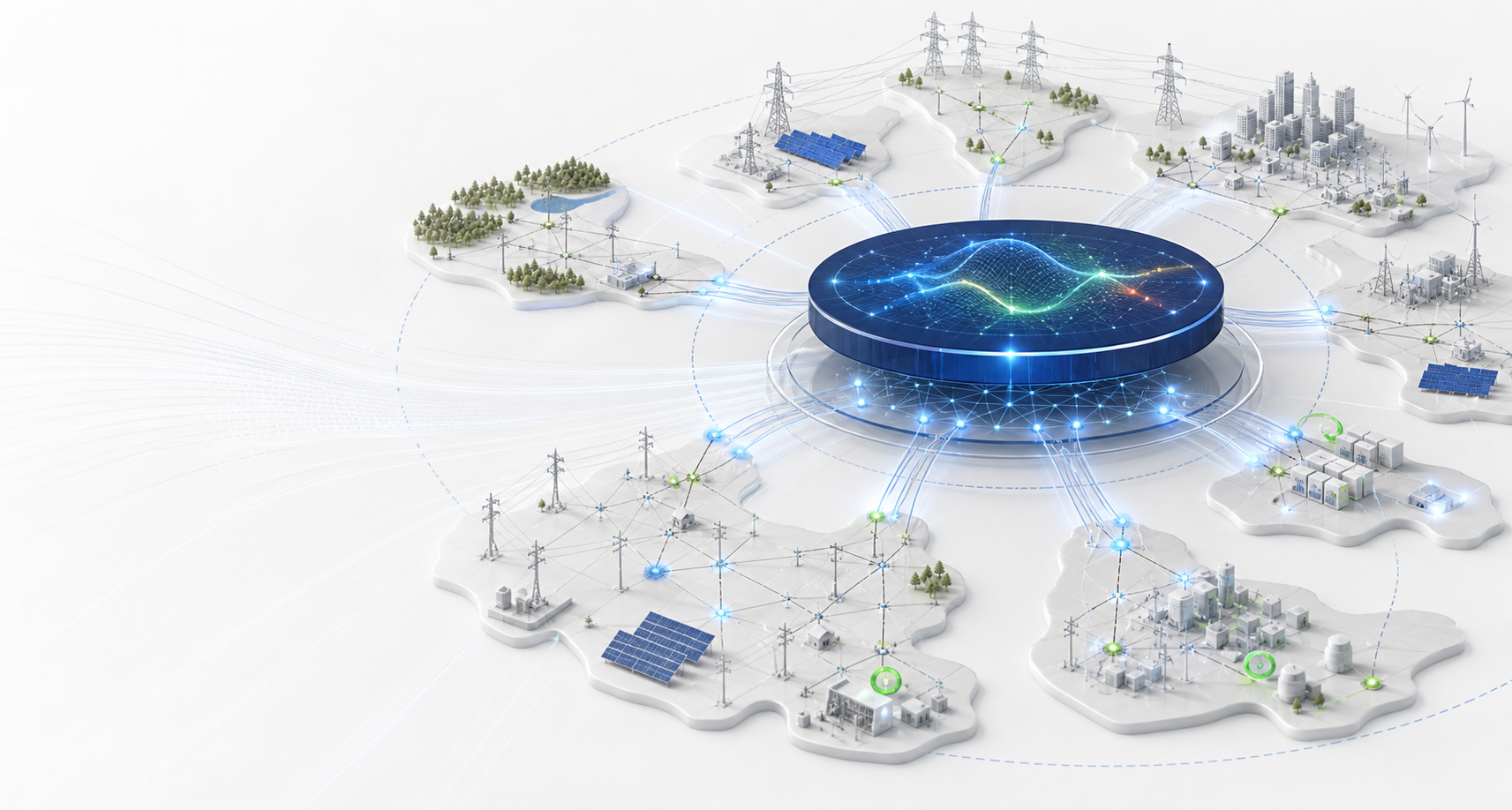
The dual-encoder result: a teacher trained on simulator physics, a student deployed on sparse field measurements, with transfer bounded by Wasserstein proximity.
The topology-invariant backbone: one trained model transfers to unseen reconfigurations without retraining on the new grid.
Operator cockpit
Models break when feeders change.
Distribution data is incomplete by default.
AI must know when not to act.
Architecture
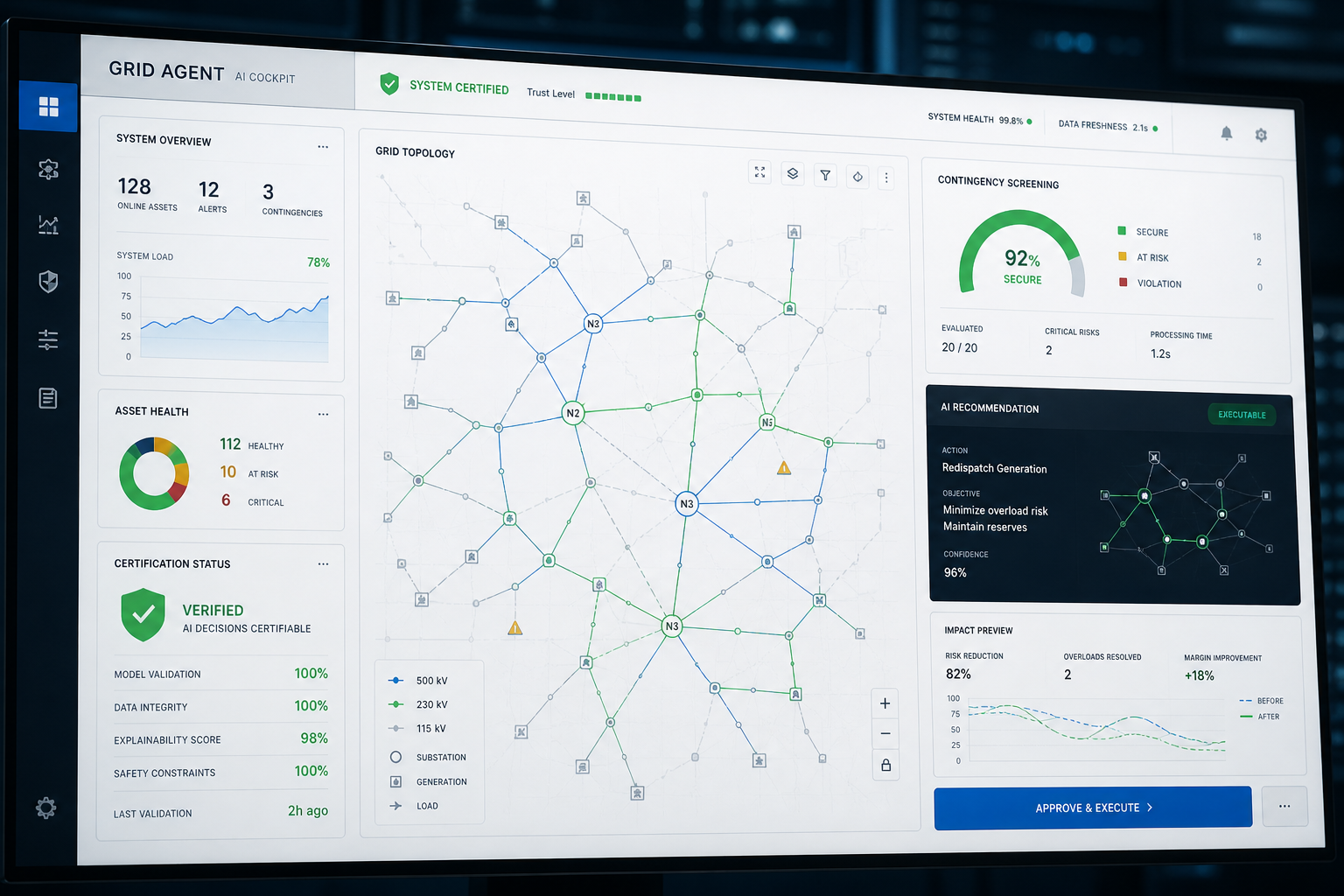
The platform is a research demonstration engine for studying how transfer, certification, and feasible control can support grid operations, planning studies, software prototypes, and market-aware grid analytics.
Transferable grid representation with per-instance feasibility checks.
Maps grid structure and observations into a shared operating geometry.
Keeps a deployable pathway aligned with the physics pathway used in training.
Selects constraint-satisfying actions in real time.
Explore
Research themes
MIND FM x (Grid Agent) for zero-shot distribution power-flow solving and cyber-resilient control on SmartDSS systems the model has never seen, with 0 system-specific fine-tuning.
Theme 02A certifiable AI engine for grid software prototypes and research services that need faster analytics inside existing study workflows.
Theme 03MIND FM x (Grid Agent) for transmission operating intelligence: fast voltage prediction, contingency screening, dispatch feasibility, market sensitivity, and operator verification across changing grid states.
Theme 04Physics-aware congestion and dispatch intelligence for trading, asset optimization, and market analytics teams.
Theme 05Grid-aware coordination for data centers and other controllable loads that need operational flexibility.
Validation
Research collaboration